
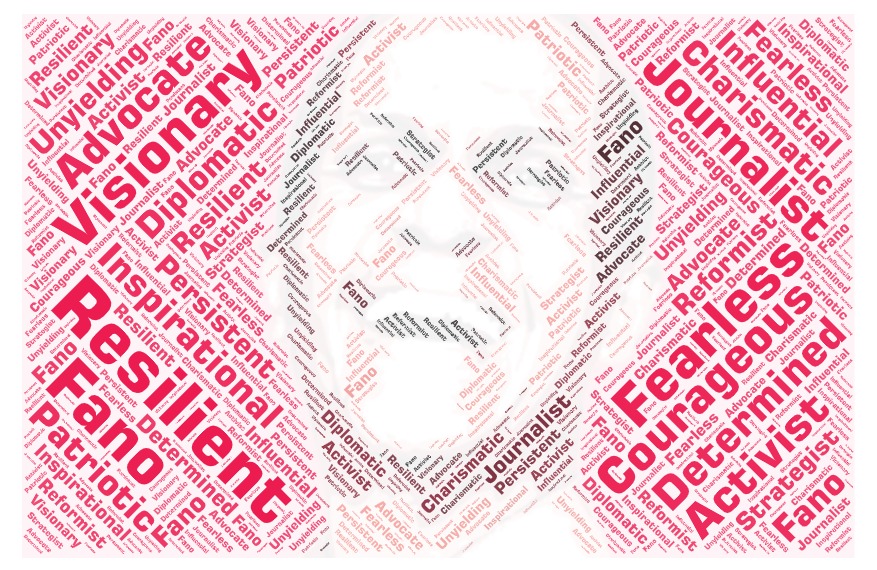
Eskinder Nega, a celebrated Ethiopian journalist, activist, and politician, has been a steadfast defender of human rights and democracy throughout his life. A prominent figure on the world stage, Eskinder has continually fought for justice, often at great personal cost. His journey from journalist to political activist, to now a leading figure in Ethiopia’s Fano movement, makes him one of the most compelling and courageous voices in Ethiopian politics today.
Early Life and Education
Born in Addis Ababa in 1966, Eskinder grew up in Ethiopia’s vibrant but politically turbulent capital. His family instilled in him a love for education and justice, values that would guide his life. Eskinder later pursued higher education in the United States, where he studied political science and journalism. This period in the U.S. gave him a global perspective and strengthened his commitment to human rights and free expression.
Eskinder eventually returned to Ethiopia, eager to contribute to his homeland’s media landscape. He co-founded and managed several independent newspapers, including Ethiopian Review and Satenaw. These publications became platforms for investigative journalism and outspoken criticism of governmental abuses. Unfortunately, his commitment to truth-telling made him a target of successive Ethiopian regimes, all of which sought to silence dissent.
Family and Life in Addis Ababa
Eskinder is a devoted husband and father. He is married to journalist and activist Serkalem Fasil, who has been a pillar of support throughout his career. The couple has one son, Nafkot, who was born while both Eskinder and Serkalem were imprisoned during Ethiopia’s oppressive anti-press campaigns in the mid-2000s. Despite the challenges of raising a child in the shadow of political persecution, Eskinder’s family has remained his anchor and inspiration.
Living in Addis Ababa, Eskinder was a central figure in Ethiopia’s political and intellectual circles. He founded the Balderas for Genuine Democracy party, aiming to address Addis Ababa’s governance issues and champion the rights of all Ethiopians. His leadership and activism earned him both local admiration and international recognition.
Hardships and Imprisonment
Eskinder has faced extraordinary hardships throughout his career. He was imprisoned multiple times under various governments, often accused of terrorism for his outspoken views. Most notably, he was arrested in 2011 under Ethiopia’s controversial anti-terrorism laws after he criticized the government’s suppression of dissent. Sentenced to 18 years in prison, Eskinder spent over six years behind bars before being released in 2018 as part of a general amnesty.
Despite these trials, Eskinder remained unbowed. Upon his release, he returned to activism, calling for genuine democracy and freedom of speech in Ethiopia. His resilience has cemented his reputation as a principled and fearless advocate for justice.
Achievements and High-Profile Connections
Eskinder’s achievements are numerous. In 2012, he was awarded the PEN/Barbara Goldsmith Freedom to Write Award in recognition of his courage and dedication to free expression. He has also been a nominee for prestigious international awards celebrating human rights defenders.
His influence extends beyond Ethiopia. Eskinder has cultivated relationships with international leaders and policymakers, including U.S. politicians like Senator Marco Rubio. Rubio, a former U.S. presidential candidate and a prominent voice on foreign policy, met with Eskinder to discuss Ethiopia’s political challenges and human rights abuses. These connections highlight Eskinder’s ability to engage with the global community and advocate for Ethiopia on the world stage.
The Fano Movement and Amhara Struggle
Eskinder’s leadership has reached new heights with his role in the Fano movement, a grassroots organization fighting for the rights of the Amhara people. In 2023, he founded the Amhara Popular Front to unite various factions and strengthen the resistance against what they see as marginalization and atrocities committed by Prime Minister Abiy Ahmed’s government.
Operating from Shewa in the Amhara region, Eskinder has been instrumental in mobilizing support and raising awareness of the Amhara people’s plight. Recently, the Fano group, under Eskinder’s leadership, has engaged with international organizations, including the African Union, the European Union, U.S. diplomats, and the Intergovernmental Authority on Development (IGAD). These discussions aim to expose alleged war crimes and articulate the Fano movement’s objectives, which include ensuring the survival, autonomy, and dignity of the Amhara people.
Challenges and Opportunities
Eskinder’s journey is not without challenges. Within the Fano movement, figures like Zemene Kassie represent alternative approaches to resistance, leading to internal debates over strategy and leadership. Additionally, the Ethiopian government has labeled Fano as a terrorist group, complicating its ability to garner international support.
However, Eskinder’s international reputation, resilience, and strategic vision give him a unique opportunity to reshape Ethiopian politics. With the new U.S. administration in place, there is potential for stronger international support for democratic movements in Ethiopia. Eskinder’s connections with global policymakers and organizations could prove pivotal in this regard.
A Game-Changing Moment for Ethiopia
As Ethiopia grapples with political and social upheaval, Eskinder Nega’s leadership represents a beacon of hope for many. His commitment to justice, his ability to unite diverse factions, and his tireless advocacy for human rights make him a transformative figure in Ethiopian politics.
Could Eskinder Nega become Ethiopia’s next leader? His track record suggests he has the vision, resilience, and support to guide the country toward a more inclusive and democratic future. With the Fano movement gaining momentum and international attention, this moment could mark a turning point in Ethiopia’s history.
Eskinder’s story is one of unwavering courage in the face of adversity. His journey from journalist to activist, to political leader, reflects the resilience and determination of the Ethiopian people. As the struggle continues, Eskinder Nega remains a symbol of hope and a potential catalyst for transformative change in Ethiopia.
Support Chonsview Media in its mission to inform, inspire, and create change through captivating content. Subscribe to the Chonsview Media YouTube channel for thought-provoking videos on important topics, and stay updated with in-depth blogs and visual stories by visiting the official website. Consider supporting our work through donations or subscribing to exclusive content—your contribution helps fuel our passion for impactful storytelling and advocacy. Together, we can elevate conversations and create a lasting impact.
 Chonsview Media