

Introduction
The Amhara people, one of Ethiopia’s largest and most historically significant ethnic groups, have played a central role in shaping the nation’s identity, governance, language, literature, and spiritual traditions. Despite their monumental contributions, they face a growing existential threat in modern Ethiopia. This blog aims to introduce the cultural richness, regional diversity, and the ongoing resistance of the Amhara people—highlighting the vibrant traditions of Gondar, Gojam, Wollo, and Shewa—while also addressing the political and demographic struggles faced especially in Addis Ababa.
The Amhara Identity: Shared Roots, Distinct Regions
While united by language (Amharic), Orthodox Christianity, and shared historical values, the Amhara are not monolithic. Each region possesses distinct styles of dress, music, dialect, and traditional customs.
1. Wollo
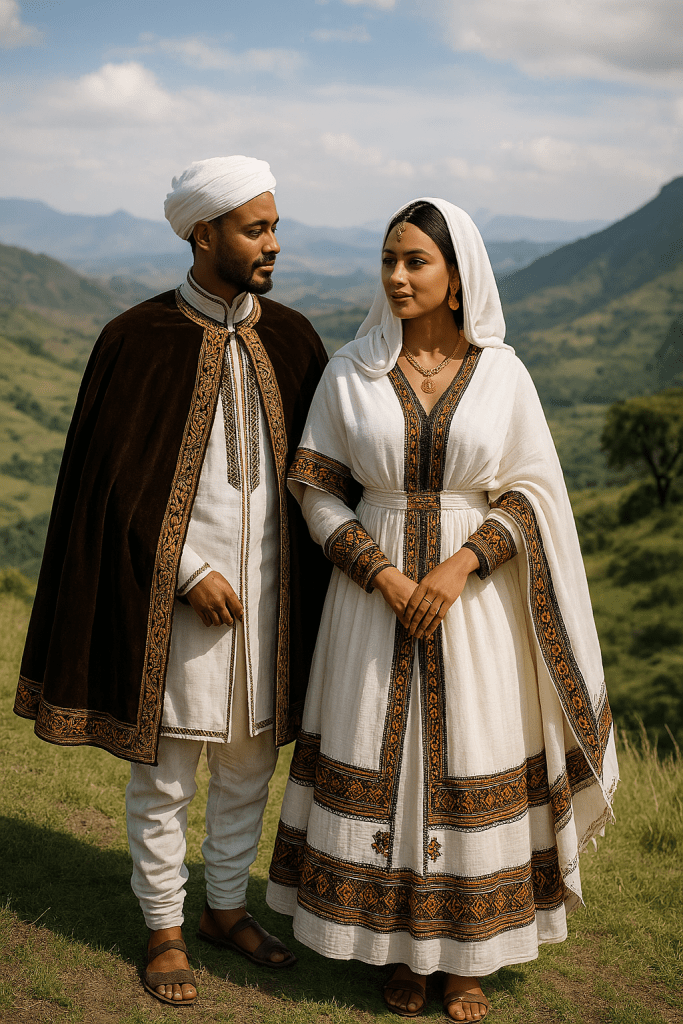
- Culture & Style: Wollo is known for its unique fusion of Christian and Muslim traditions. Traditional clothing includes elegant white cotton dresses with intricate embroidery and colorful scarves (ነጠላ) for women, while men wear long shirts (ጦብ) and shawls.
- Spiritual Significance: Home to many Orthodox monasteries and Muslim shrines, Wollo symbolizes religious coexistence.
- Current Struggles: Wollo towns like Dessie and Kombolcha have been frontline battlegrounds in recent conflicts, with local Fano fighters emerging as protectors of their communities.

2. Shewa
- Culture & Style: As the political heartland, Shewa showcases a mix of traditional and modern attire. Women wear white dresses with blue and red borders. Men often dress in military-style uniforms today to symbolize their active resistance.
- Historical Role: Home to many of Ethiopia’s emperors including Menelik II, Shewa has influenced national governance, education, and diplomacy.
- Addis Ababa Influence: Though the capital is a melting pot, Shewa-origin Amhara have historically shaped the city’s development. Today, they face forced gentrification and political targeting.

3. Gondar
- Culture & Style: Known for regal, golden embroidery, and deep-blue and red garments. Gondar women adorn themselves with elaborate jewelry and traditional braided hairstyles.
- Spiritual & Historical Significance: Gondar is Ethiopia’s medieval capital, with churches like Debre Berhan Selassie symbolizing Ethiopian Orthodoxy.
- Resistance Role: Gondar remains a bastion of the Fano movement. Youths have taken up arms to defend their people and cultural heritage.

4. Gojam
- Culture & Style: Famous for dignified, pastoral styles—long robes for men and flowing dresses for women. Deep connection to the land is reflected in agricultural motifs.
- Spiritual Strength: Monasteries like Gishen Mariam are pilgrimage sites.
- Defensive Pride: Gojam Amhara are recognized for their fierce defense and strong community cohesion.

Addis Ababa: Changing Demographics & Erased History
Once a symbol of pan-Ethiopian unity, Addis Ababa has seen systematic efforts to change its demographic makeup. Longtime Amhara and other non-Oromo residents face displacement, exclusion from city planning, and erasure of cultural landmarks. Yet, the contributions of Amhara elites, artists, diplomats, and academics have built the city’s very foundation.
Faith, Resistance, and Resilience
The Amhara people, deeply spiritual and rooted in Orthodox Christianity—with growing evangelical and Islamic minorities—view their resistance as a sacred duty. Churches have become sanctuaries and rallying points, while prayers and fasting accompany armed defense in rural and urban areas.
The Fano movement, primarily made up of young men and women, symbolizes both cultural preservation and resistance against ethnic federalism and targeted violence.

Literature, Music & Legacy
From the classical poetry of Tsegaye Gebre-Medhin to the revolutionary songs of Teddy Afro, Amhara voices have defined Ethiopian literature and music. Their stories are filled with pain, hope, resistance, and divine connection.
Conclusion: A Call to Reclaim the Narrative
For decades, the Amhara have been falsely labeled as oppressors while being simultaneously marginalized and attacked. Today, their culture is under threat, their people displaced or massacred, and their contributions erased.
This blog stands as a tribute to their enduring spirit. It is time to reverse the narrative, document the truth, and advocate for peace, justice, and dignity for the Amhara people—pillars of Ethiopia and protectors of its soul.
Make a one-time donation
Make a monthly donation
Make a yearly donation
Choose an amount
Or enter a custom amount
Your contribution is appreciated.
Your contribution is appreciated.
Your contribution is appreciated.
DonateDonate monthlyDonate yearly Chonsview Media