
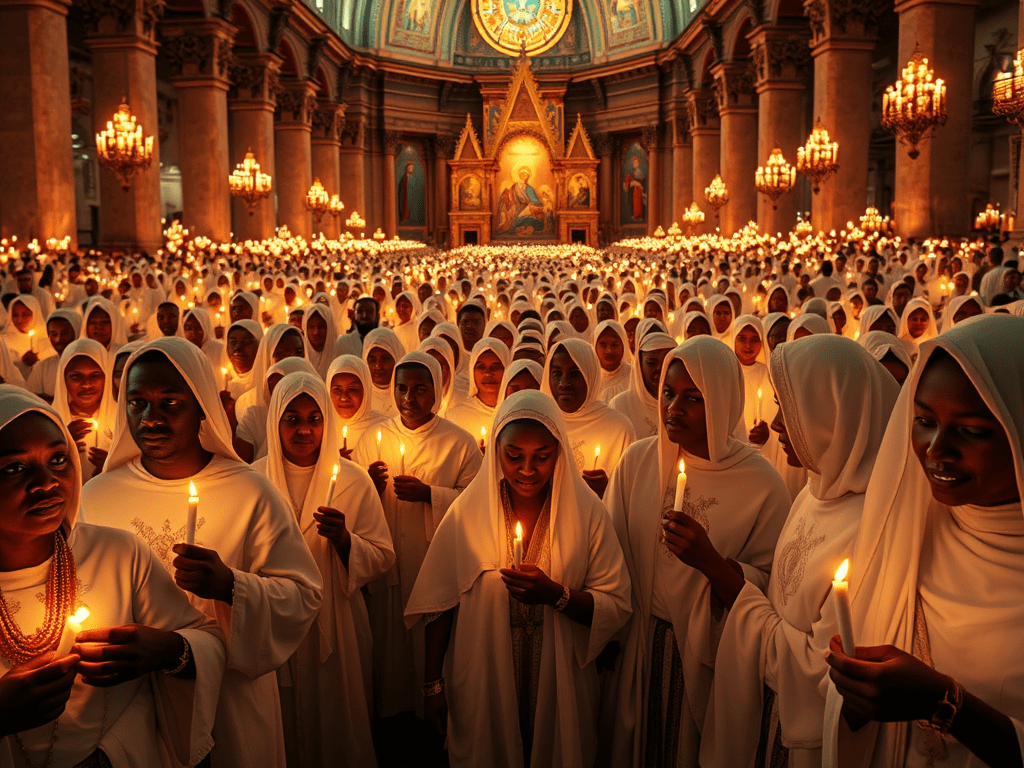
The Ethiopian Orthodox Tewahedo Church, one of the oldest Christian institutions in the world, played a pivotal role in the Battle of Adwa. Its influence extended far beyond the spiritual realm, deeply intertwining with Ethiopia’s cultural, social, and political fabric. The Church’s involvement in the battle was not merely symbolic; it was a testament to its central role in uniting Ethiopians and inspiring them to defend their faith, land, and sovereignty.
Buy Now
Spiritual Guidance and Moral Support
The Ethiopian Orthodox Tewahedo Church has always been a cornerstone of Ethiopian identity. For centuries, it has served as a unifying force, bringing together people from diverse ethnic and linguistic backgrounds under a shared faith. During the lead-up to the Battle of Adwa, the Church provided spiritual guidance and moral support to the Ethiopian people and their leaders.
Priests and monks across the country held prayer vigils, fasted, and conducted religious ceremonies to seek divine intervention for Ethiopia’s victory. The Church’s leaders emphasized that the fight against Italian colonialism was not just a political struggle but also a spiritual one. They framed the battle as a holy war, a defense of Christianity and Ethiopian sovereignty against foreign invaders. This spiritual framing galvanized the Ethiopian warriors, many of whom saw themselves as soldiers of God fighting for a righteous cause.


The Church as a Unifying Force
One of the most remarkable aspects of the Battle of Adwa was the unity it fostered among Ethiopians. The Ethiopian Orthodox Church played a crucial role in this unity. At a time when Ethiopia was a patchwork of regional kingdoms and ethnic groups, the Church provided a common identity and purpose. It transcended ethnic and linguistic differences, reminding Ethiopians of their shared heritage and faith.
The Church’s teachings emphasized the idea of “ኢትዮጵያ ታበጽሕ እግዚአብሔር” (Ityopiya tabetsih Egziabher)—”Ethiopia stretches her hands unto God”—a phrase derived from Psalm 68:31 in the Bible. This idea of Ethiopia as a nation chosen by God to uphold Christianity in Africa resonated deeply with the people and fueled their determination to resist colonization.
Buy Now
The Role of Clergy in the Battle
The involvement of the Church was not limited to prayers and sermons. Many members of the clergy actively participated in the battle. Priests and monks joined the ranks of the Ethiopian army, carrying crosses and religious icons into the battlefield. They blessed the warriors and encouraged them to fight with courage and faith.
One notable figure was Abune Matewos, the Archbishop of the Ethiopian Orthodox Church at the time. He played a key role in rallying support for the war effort and ensuring that the Church’s resources were mobilized to aid the army. The Church also provided logistical support, including food, shelter, and medical care for the warriors.
Buy Now
The Ark of the Covenant and Divine Protection
The Ethiopian Orthodox Church’s unique connection to the Ark of the Covenant also played a symbolic role in the Battle of Adwa. According to Ethiopian tradition, the Ark, which is believed to house the original Ten Commandments, is kept in the Church of St. Mary of Zion in Axum. The presence of the Ark in Ethiopia has long been a source of spiritual pride and a symbol of divine favor.
During the battle, many Ethiopians believed that the Ark’s spiritual power protected them and ensured their victory. This belief further strengthened their resolve and instilled a sense of invincibility among the warriors. The idea that God was on their side gave them the courage to face a better-armed and technologically superior enemy.
Buy Now

The Church’s Role in Preserving Ethiopian Identity
The victory at Adwa was not just a military triumph; it was also a cultural and spiritual one. The Ethiopian Orthodox Church played a crucial role in preserving Ethiopia’s unique identity in the face of external threats. By framing the battle as a defense of Christianity and Ethiopian heritage, the Church ensured that the victory was seen as a divine affirmation of Ethiopia’s special place in history.
After the battle, the Church continued to play a central role in Ethiopian society. It preserved Ethiopia’s ancient traditions, including its liturgical language, Ge’ez, and its rich heritage of religious art, music, and literature. The Church’s monasteries and churches became repositories of knowledge and culture, safeguarding Ethiopia’s history for future generations.
Buy Now
The Church’s Legacy in Modern Ethiopia
Today, the Ethiopian Orthodox Church remains a vital institution in Ethiopia, deeply respected by millions of Ethiopians. Its role in the Battle of Adwa is remembered with pride and gratitude. The Church’s ability to unite people across ethnic and regional lines during the battle serves as a powerful reminder of the importance of unity in the face of adversity.
However, the Church has faced challenges in recent years, particularly under the current government led by Prime Minister Abiy Ahmed. There have been reports of tensions between the government and the Church, as well as concerns about the erosion of Ethiopia’s cultural and religious heritage. Despite these challenges, the Church continues to be a source of strength and resilience for many Ethiopians.
Buy Now
Conclusion: A Testament to Faith and Unity
The Ethiopian Orthodox Church’s role in the Battle of Adwa is a testament to the power of faith and unity. By providing spiritual guidance, moral support, and practical assistance, the Church helped Ethiopians achieve a historic victory that continues to inspire people around the world. As we celebrate Black History Month and reflect on the legacy of Adwa, let us honor the Church’s contributions and remember the enduring spirit of a people who fought not just for their land but also for their faith and identity.
ኢትዮጵያ ታበጽሕ እግዚአብሔር!
Ityopiya tabetsih Egziabher!
Ethiopia stretches her hands unto God!

Support This Blog
This blog contains Amazon affiliate links. If you purchase through these links, I may earn a small commission at no extra cost to you. Your support helps me continue creating informative and meaningful content that celebrates Ethiopia’s rich history and culture. If you appreciate this work, consider shopping through the links or making a donation to help sustain independent storytelling. Thank you for being part of this journey in honoring our past and shaping our future!
Make a one-time donation
Make a monthly donation
Make a yearly donation
Choose an amount
Or enter a custom amount
Your contribution is appreciated.
Your contribution is appreciated.
Your contribution is appreciated.
DonateDonate monthlyDonate yearly Chonsview Media